
Program
Invited Talk
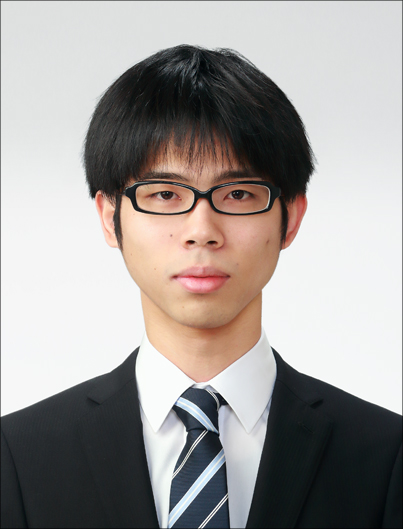
Domain Adaptation under Constraints on Source Data and Models
Yu Mitsuzumi
Communication Science Laboratories, NTT, Inc.
Abstract: Domain adaptation aims to transfer the knowledge acquired by a model trained on a source domain so that it can be effectively utilized in a different target domain. In the era of large-scale pretrained models, domain adaptation has attracted increasing attention because it enables models to operate robustly even in deployment environments that differ substantially from those encountered during training. However, practical applications often involve restrictions on the availability of source-domain data and trained source models, creating a need for domain adaptation techniques that can operate under such constraints.
In this talk, I will introduce our recent studies on domain adaptation under two challenging settings: one where access to source-domain data is restricted (CVPR 2024), and another where access to the source model is restricted (WACV 2026). In the former setting, known as source-free domain adaptation, I will discuss the theoretical foundations that help explain why existing approaches work and show how these insights lead to improved adaptation methods. In the latter setting, I will present a novel paradigm called model-free domain adaptation, which addresses an extreme scenario in which the source model intended for adaptation is completely inaccessible except during test time.
Technical Session 1: Visual Generation and Restoration
Session Chair: Yu Mitsuzumi
- SyncBEV: Diffusion-Based, High-Fidelity Synchronized Bird's-Eye-View Synthesis from Ground-View Data
- Zero-Shot Action Customization by Composing LoRAs with CLIP-Based Weights
- FontUse: A Data-Centric Approach to Style- and Use-Case-Conditioned In-Image Typography
- The Price of Global Context in Lightweight Mamba Image Super-Resolution
Coffee Break
Technical Session 2: Visual Understanding, Datasets and Applications
Session Chair: Xian-Hua Han
- Align or Fail: The Hidden Gap in Cross-Domain Panoptic Segmentation
- Mat2Seg: An RGB-NIR Dataset and Benchmark for Material Segmentation of Household Objects
- A Comparative Study of Contour Parameterizations for Optimal Deep Learning-Based Echography Image Segmentation
- RootDown: Deploying and Benchmarking Models for Beet-Root Detection on Edge Devices
- PoP-Caption: A Phase-of-Play Soccer Video Captioning Dataset for Tactical Understanding
- SEAL: Decoupling Representation Erasure and Utility Recovery for Machine Unlearning
Closing Remarks
Workshop Chair: Eisei Nakahara
Announcement of the Best Paper and Best Oral Presentation awards